EXECUTIVE SUMMARY
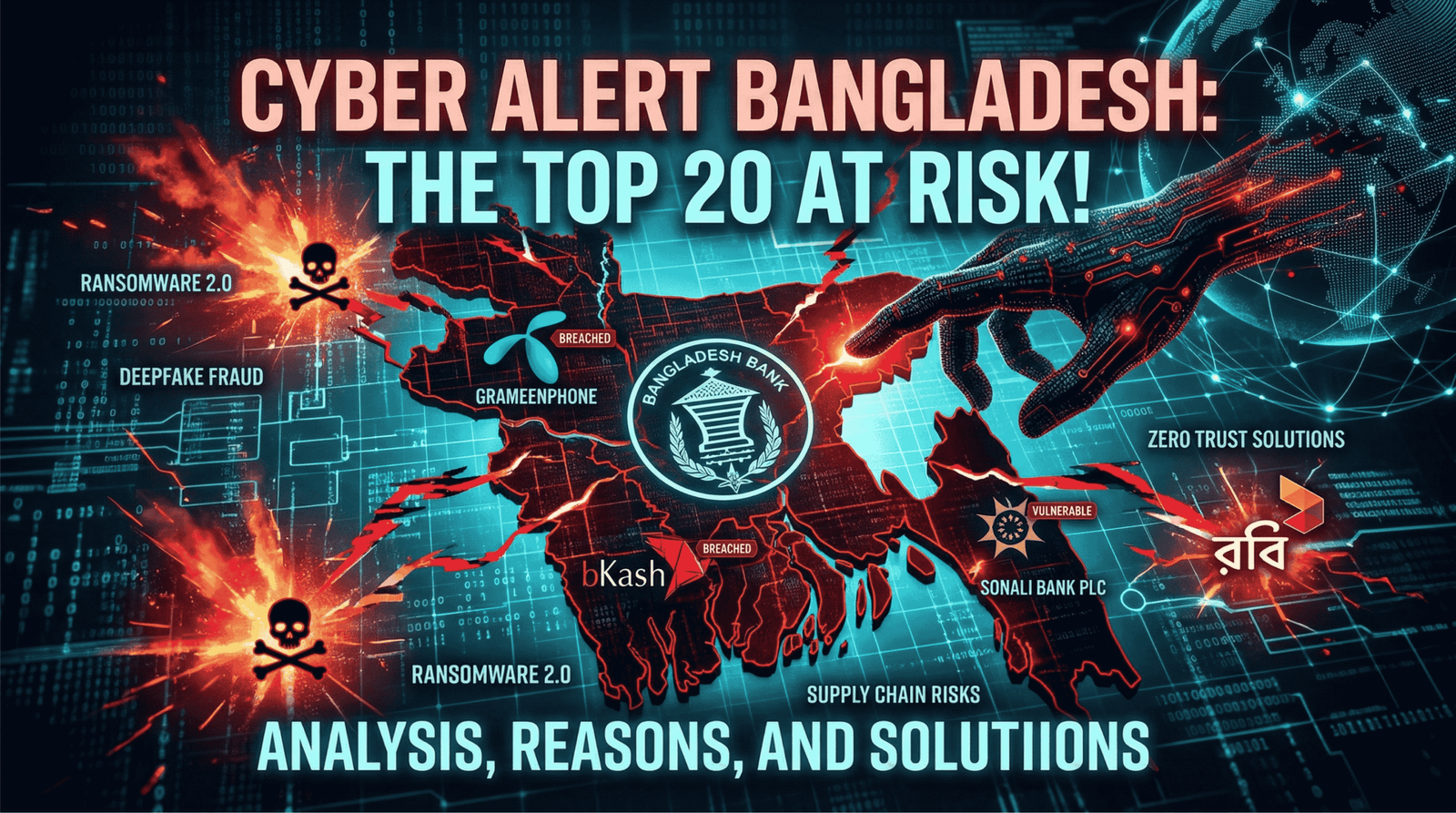
As Bangladesh accelerates its digital transformation under the “Smart Bangladesh” initiative, the nation’s critical infrastructure, financial sectors, and public services have become highly lucrative targets for global threat actors. Over the past three years (2023–2026), the cybersecurity paradigm has shifted from isolated, low-level defacements to sophisticated, targeted operations, including double-extortion ransomware and state-sponsored espionage. This report provides a detailed analysis of the attack volume, targeted entities, organizational responses, workforce dynamics, and strategic recommendations for fortifying the national cyber defense posture.
1. THREAT LANDSCAPE AND STATISTICAL OVERVIEW
The frequency and sophistication of cyberattacks in Bangladesh have grown exponentially. Threat actors have capitalized on vulnerabilities exposed by rapid digital adoption, lagging regulatory compliance, and a lack of baseline security hygiene in both public and private sectors.
Attack Volume (2023–2026)
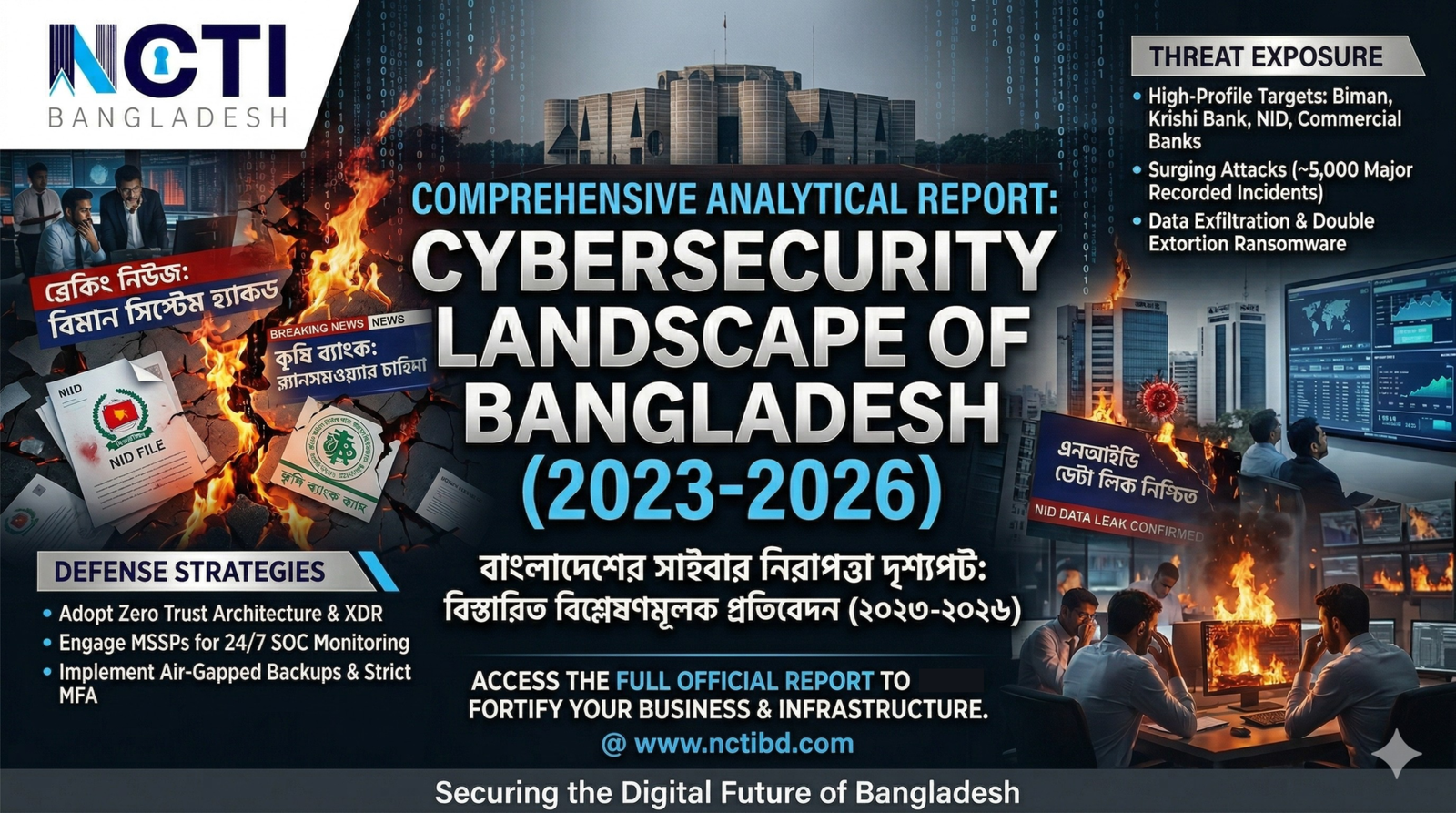
Based on aggregated data from national incident response teams and private security analytics, an estimated 4,800 to 5,200 significant cyber incidents were officially documented over the last 36 months. However, owing to the absence of a strict mandatory breach reporting law across all sectors, industry analysts project that the actual volume of incidents, particularly among small and medium enterprises (SMEs), is significantly higher, likely exceeding 15,000 discrete breaches.
Current Statistical Distribution
The threat landscape is highly diversified, with financially motivated attacks dominating the metrics. The current distribution of attacks by sector and primary threat vector is as follows:
| Target Sector | Proportion of Total Attacks | Primary Threat Vectors |
| Financial & Banking | 38% | Ransomware, SWIFT infrastructure targeting, Phishing |
| Government & Critical Infrastructure | 32% | Distributed Denial of Service (DDoS), Data Exfiltration |
| Telecommunications | 15% | API Vulnerabilities, Subscriber Data Theft |
| E-commerce & Retail | 10% | SQL Injection, Payment Gateway Manipulation |
| Healthcare & Emerging Sectors | 5% | Ransomware, Insider Threats |
2. HIGH-PROFILE INCIDENTS AND TARGETED ENTITIES
The period under review witnessed several landmark breaches that exposed systemic vulnerabilities within critical national infrastructure. Notable compromises included:
- Biman Bangladesh Airlines: In a highly publicized 2023 incident, the national carrier suffered a debilitating ransomware attack. Threat actors compromised internal networks, encrypting critical operational databases and exfiltrating sensitive corporate and passenger data. This incident highlighted the severe lack of network segmentation and incident response readiness in the aviation sector.
- Bangladesh Krishi Bank: Targeted by advanced ransomware syndicates, the state-owned financial institution faced significant operational disruption. The attackers successfully bypassed perimeter defenses, emphasizing the vulnerability of legacy banking systems to modern extortion tactics.
- National Database Exposures: A critical configuration error led to the exposure of the National ID (NID) database, compromising the personally identifiable information (PII) of millions of citizens. This breach demonstrated the risks associated with centralized data repositories lacking adequate cryptographic protections.
- Commercial Banking Sector: Numerous tier-1 commercial banks have been subjected to sustained DDoS campaigns by hacktivist collectives. These attacks, often geopolitical in nature, resulted in intermittent but severe disruptions to mobile and internet banking services.
3. ORGANIZATIONAL REMEDIATION AND CURRENT COUNTERMEASURES
In response to the escalating threat environment, targeted entities and the broader corporate sector have initiated a paradigm shift from reactive firefighting to proactive defense. Current steps being taken include:
- Establishment of Security Operations Centers (SOC): Major financial institutions and telecom operators have heavily invested in 24/7 SOCs, utilizing Security Information and Event Management (SIEM) systems to detect anomalies in real-time.
- Enhanced Audit and Compliance: Organizations are enforcing stricter compliance with the Bangladesh Bank’s ICT Security Guidelines. Quarterly Vulnerability Assessment and Penetration Testing (VAPT) and red-teaming exercises are becoming standard practice.
- Architectural Resilience: Entities that suffered ransomware attacks have overhauled their disaster recovery protocols. The implementation of immutable, air-gapped backups is now a priority to ensure business continuity without capitulating to ransom demands.
- Adoption of Managed Security Services: Due to internal capacity constraints, many organizations are outsourcing continuous monitoring to Managed Security Service Providers (MSSPs).
4. STRATEGIC RECOMMENDATIONS FOR OPTIMAL PROTECTION
To build long-term resilience against advanced persistent threats (APTs) and automated attack frameworks, organizations operating in Bangladesh must adopt comprehensive, modern security architectures:
- Implementation of Zero Trust Architecture (ZTA): Perimeter-based security is no longer sufficient. Organizations must adopt a Zero Trust model, requiring continuous authentication and authorization for every user and device, regardless of their location on the network.
- Deployment of Extended Detection and Response (XDR): Transitioning from legacy antivirus software to AI-driven XDR solutions provides holistic visibility across endpoints, networks, and cloud workloads, enabling automated containment of ransomware.
- Enforcement of Cryptographic Standards: Mandatory implementation of Multi-Factor Authentication (MFA) across all enterprise access points, coupled with robust encryption protocols for data at rest and in transit.
- Human Risk Management: As human error remains the primary attack vector, organizations must institute continuous, localized, and gamified security awareness training, including routine simulated phishing campaigns.
5. THE CYBERSECURITY WORKFORCE LANDSCAPE IN BANGLADESH
The escalation in cyber threats has catalyzed an unprecedented demand for security professionals, exposing critical challenges in the local labor market.
- The Talent Deficit: There is an acute shortage of specialized, operational talent. While there is a growing pool of entry-level candidates with theoretical certifications, the market severely lacks experienced Incident Responders, Cloud Security Architects, and Malware Analysts capable of managing high-stakes breaches.
- Retention and Migration: Bangladesh is experiencing a significant “brain drain” in the cybersecurity sector. Highly skilled professionals frequently migrate to North America, Europe, or the Middle East, drawn by superior compensation and exposure to advanced technological environments.
- Compensation Dynamics: To combat attrition, domestic corporate entities have drastically increased compensation packages for mid-to-senior level cybersecurity roles. The position of Chief Information Security Officer (CISO) is now recognized at the executive tier.
6. FUTURE OUTLOOK AND PROJECTIONS
The cybersecurity trajectory for Bangladesh over the next decade will be dictated by rapid technological integration and the necessity for regulatory maturation.
- AI-Driven Offensive and Defensive Capabilities: Threat actors will increasingly utilize Generative AI to automate vulnerability discovery and craft hyper-realistic social engineering campaigns. Conversely, local defense mechanisms will rely heavily on AI to predict and neutralize threats autonomously.
- Regulatory Evolution: It is anticipated that the government will enact more stringent, comprehensive data protection legislation modeled on international frameworks. This will likely introduce mandatory breach reporting and substantial punitive measures for negligence.
- Cloud Infrastructure Vulnerabilities: As the government and private enterprises accelerate their migration to cloud environments, misconfigurations in cloud access management will emerge as the primary vector for data breaches, shifting the focus away from traditional on-premise security.
- Growth of the Domestic Cyber Industry: The severe necessity for localized security solutions will drive the expansion of indigenous cybersecurity startups, consulting firms, and MSSPs, fostering a self-sustaining digital defense ecosystem within the country.
CONCLUSION
The cyber threat landscape in Bangladesh has reached a critical inflection point. The transition from a developing digital economy to a mature “Smart” infrastructure necessitates that cybersecurity be treated not merely as an IT operational requirement, but as a foundational pillar of national and corporate governance. Continuous investment in human capital, advanced defensive technologies, and resilient architectures will be imperative to secure the digital future of Bangladesh.